
2025-12-02 · By Michael Tracy, Lightning Bay Electric · Tampa, FL
Why Whole-Home Surge Protection Is Essential in Florida (and What It Really Costs)
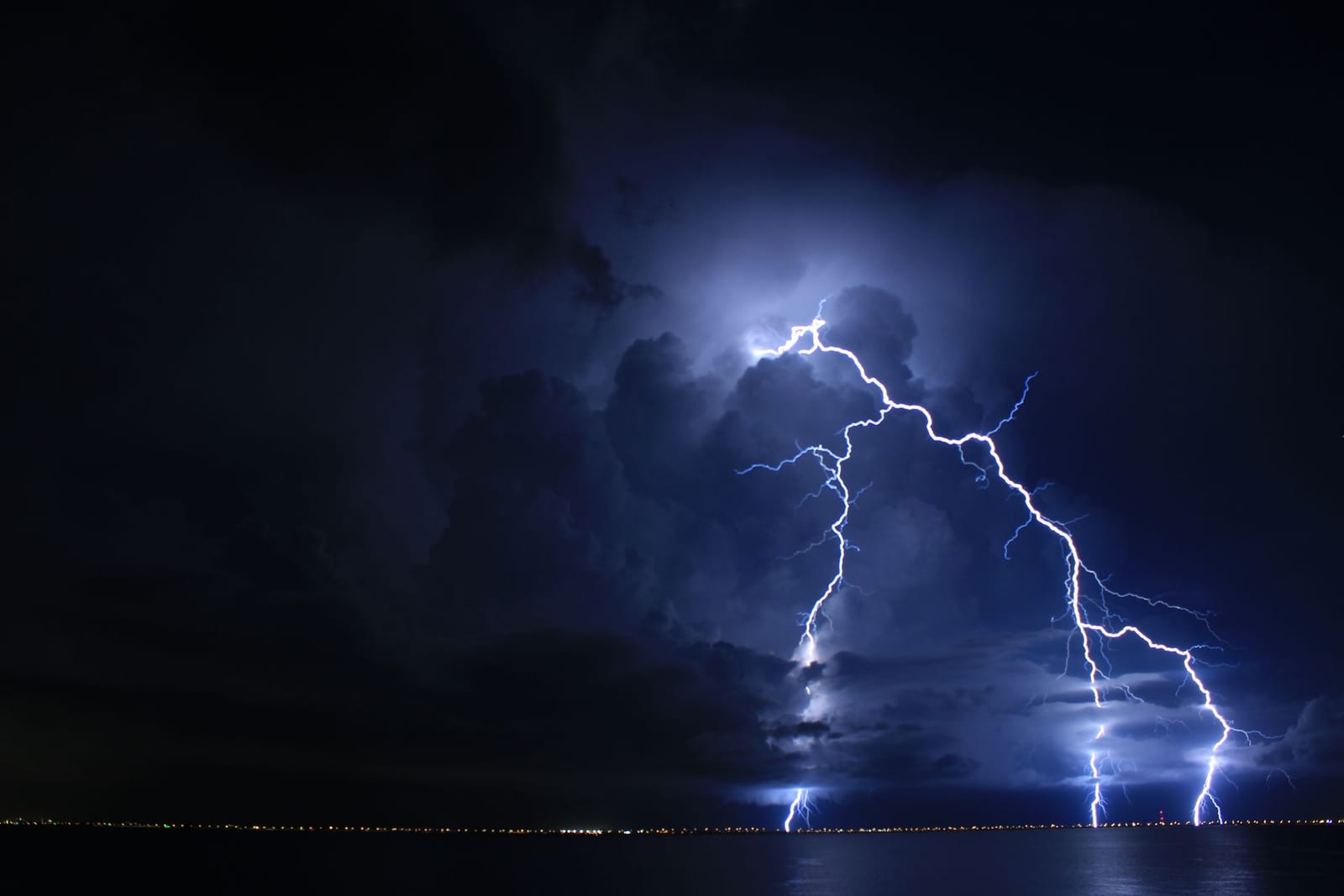
We live in the lightning capital for a reason
The corridor from Tampa Bay across to Orlando is often called Lightning Alley, and Florida records more lightning strikes per square mile than any other state. The reason is simple geography: sea breezes from the Gulf and the Atlantic collide over the peninsula nearly every summer afternoon, building the thunderstorms that roll over Hillsborough, Pasco and Pinellas counties from roughly June through September. Anyone who has lived here through a July knows the 3 p.m. storm is more reliable than the mail.
What most homeowners do not realize is that lightning does not have to hit your house to damage it. A strike on a TECO or Duke Energy line a mile away, a strike on a neighbor's tree, or a strike on the ground near a buried cable can induce a voltage spike that travels through the utility service, the cable line, or the phone line and into every device that happens to be plugged in. Those indirect surges are far more common than direct strikes, and they are what whole-home surge protection is built to stop.
What a surge actually does to your house
Your home runs on 120 and 240 volts. A lightning-induced surge can push thousands of volts through the same wires for a few microseconds. Modern appliances are full of circuit boards, and the insulation and semiconductors on those boards are rated for normal voltage plus a margin, not for thousands of volts. Sometimes the damage is immediate and obvious: a dead AC control board, a fried garage door opener, a refrigerator that will not cool, a TV that will not turn on. Just as often the damage is cumulative. Each small surge degrades the components a little, and the appliance fails months later in a way that looks like ordinary wear.
In Tampa Bay the single most expensive casualty is the air conditioning system. The outdoor condenser has a control board, a capacitor and a contactor, and the indoor air handler has a variable-speed blower board that can cost roughly $600 to $1,500 to replace. A full system replacement is $8,000 to $15,000. We see surge-damaged AC boards every summer, and HVAC companies see far more. The second most common casualties are the things you do not think of as electronics: the dishwasher, the washer and dryer, the range, the water heater controller, the pool pump drive, the well pump controller and the irrigation timer. All of them have boards now.
Why power strips are not enough
A power strip surge protector is a point-of-use device. It protects what is plugged into it, and only up to its small joule rating, after which it quietly stops protecting and keeps working as a plain power strip. It cannot protect the AC, the range, the water heater, the dryer, the pool pump or anything else that is hardwired or on a 240-volt circuit. It also cannot protect against a surge that enters through the cable or phone line and exits through a different path.
The correct approach, which is the one the NEC and the IEEE both describe, is layered protection. Layer one is a whole-home surge protective device, an SPD, installed at the main electrical panel. It clamps the large surges coming in from the utility and from lightning before they reach any branch circuit. Layer two is point-of-use protection on sensitive electronics like computers, home theater gear and medical devices, which catches what gets through and what is generated inside the house. Layer three, which most people forget, is protection on the cable, satellite and phone lines where they enter the house, because those are surge paths too.
NEC 2023 now requires it in many cases
This is not just our opinion. NEC 2020 first required surge protection for new dwelling services and for service upgrades, and NEC 2023, which Florida adopted through the Florida Building Code, carries that requirement forward in Article 230.67. In practical terms, when we upgrade a panel or replace a service in Tampa, Brandon or Wesley Chapel, a Type 1 or Type 2 surge protective device is part of the job and the inspector looks for it. The code changed because the data on surge damage to modern homes became impossible to ignore.
If your home was built or last had its service upgraded before that requirement, you almost certainly do not have one. Open your panel cover, and if you do not see a small box, usually with a status light, mounted on or next to the panel, you are unprotected. It takes us about five minutes to tell you over the phone.
What whole-home surge protection costs in Tampa Bay
A quality Type 2 SPD from a major manufacturer, installed at the main panel by a licensed electrician, typically runs roughly $400 to $900 total including the device, the labor and, where required, the permit. Devices with higher surge current ratings, typically 80 to 120 kA, and with connected-equipment warranties cost more than entry-level 40 to 50 kA units but are the better buy in our climate. If your panel is full or is an older brand that needs a special mounting, the labor side can go up slightly. Adding a secondary SPD at a subpanel, a detached garage, a pool equipment panel or a dock feeder typically adds roughly $300 to $600 each.
Compare that to a single AC board replacement. Compare it to the deductible on a homeowner's insurance claim, which in Florida is commonly $2,500 or more, and to the premium increase after a claim. The math is not subtle. A whole-home SPD is the highest-value single item we install, and it is the one we recommend to every customer whether or not they buy anything else from us.
Choosing the right device
Look for a UL 1449 listed Type 1 or Type 2 SPD with a surge current rating of at least 50 kA per phase, and preferably 80 kA or higher for Tampa Bay. Look for a low voltage protection rating, which is the voltage the device lets through after it clamps. Lower is better, and roughly 600 to 700 volts is typical for good residential units. Look for a status indicator so you know when the device has absorbed enough hits to be worn out, which in Florida can be a few years rather than a decade. Look for a connected-equipment warranty, because the manufacturers that offer them are expressing real confidence.
Mounting location matters more than most people think. An SPD works by shunting the surge to ground, and the shorter and straighter the conductors between the device and the bus, the better it works. Every extra foot of wire adds voltage on the let-through. We mount the device as close to the main breaker as physically possible and keep the leads short, and we verify the panel's grounding electrode system is sound, because an SPD cannot shunt a surge to a ground rod that has corroded away. In coastal salt air, that ground system check is not optional.
Surge protection and your generator
If you have a standby generator or plan to get one, surge protection becomes even more important, not less. The moments when the utility drops and when it comes back are the dirtiest moments on the grid, with voltage swings that repeatedly hit your equipment. A transfer switch passes those transients through if nothing clamps them. We recommend an SPD on the load side of the transfer switch so the house is protected on both utility and generator power, and many of our generator customers add one at the same time because the labor overlaps.
Frequently asked questions
Q: Will a whole-home surge protector stop a direct lightning strike? No device can guarantee protection from a direct strike to your house, which delivers energy beyond any residential SPD. What it does stop is the far more common indirect surge from nearby strikes and utility switching, which accounts for the large majority of surge damage. A lightning rod system is a separate product for direct-strike protection.
Q: How long does an SPD last? Typically 5 to 10 years, less in Tampa Bay's strike density. Every surge it absorbs uses up a little of its capacity. That is why the status light matters. We check it during any service call.
Q: Do I still need power strips? Yes, for layer two. Keep quality point-of-use protectors on computers, TVs and home office gear. Replace them every few years.
Q: Does insurance cover surge damage? Often yes for lightning, but you pay the deductible and the claim goes on your record. Prevention is cheaper. Some carriers also ask about surge protection on a 4-point inspection.
Q: Can I install one myself? A Type 2 SPD mounts inside or next to the main panel on live bus bars. It requires working in the panel with the service energized or pulling the meter, and in most Tampa Bay jurisdictions it requires a permit. We strongly recommend a licensed electrician.
Protect the house before the next storm
A whole-home surge protector is a one-hour job that guards everything you own that plugs in. Lightning Bay Electric installs SPDs across Tampa, St. Petersburg, Clearwater, Brandon, Riverview, Wesley Chapel, Lakeland and Bradenton, and we can often do it the same week you call. Visit our whole-home surge protection page or call (813) 897-2665 to schedule.