
Residential · Tampa Bay, FL · License EC13013571
New Construction & Remodel Electrical in Tampa Bay, FL
Temp power, rough-in, service, trim-out and final: electrical for new homes, additions and remodels, on schedule and inspection-ready.
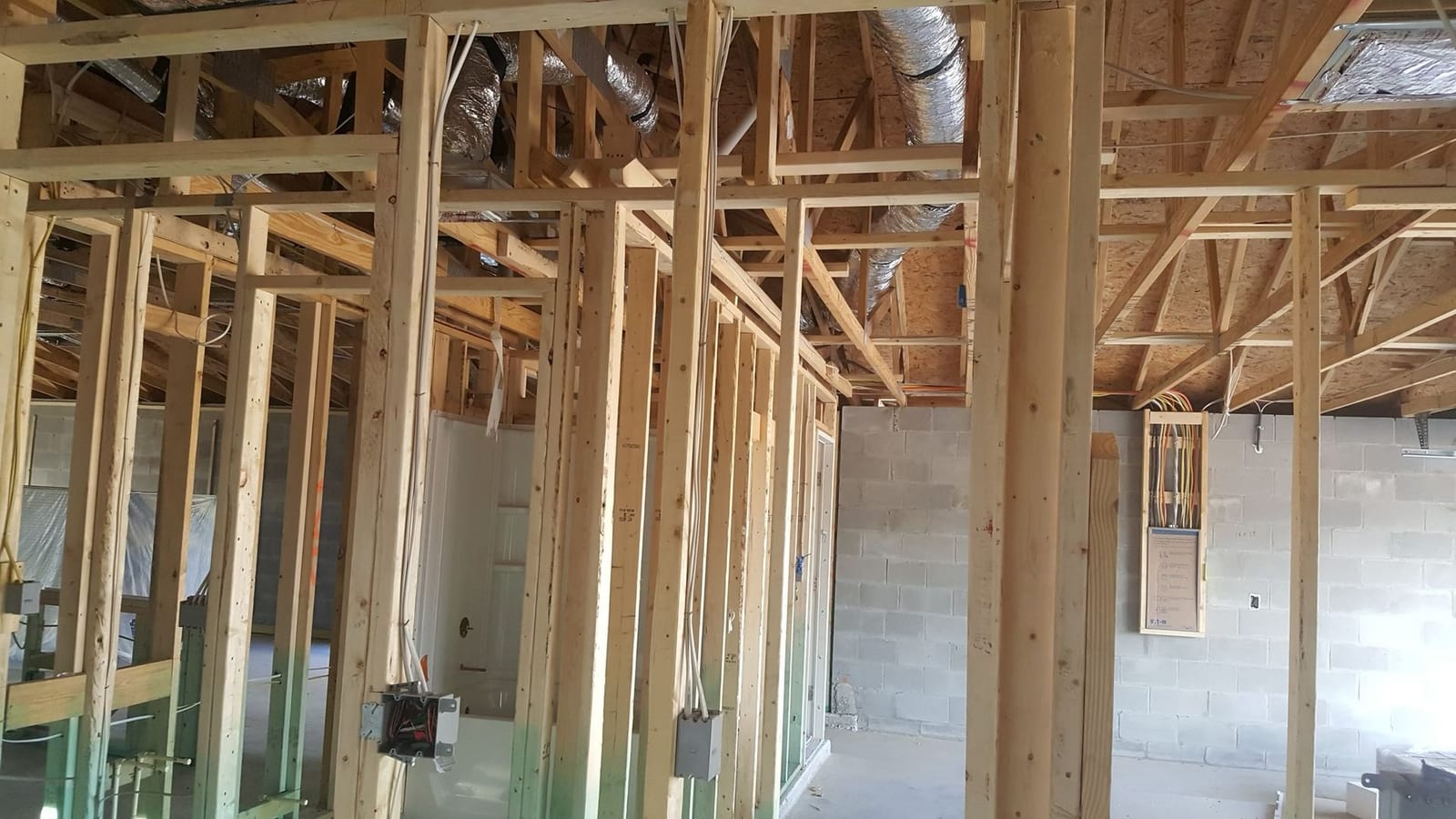
Tampa Bay is one of the fastest-growing regions in the country, and Lightning Bay Electric wires the homes, additions and remodels going up across Riverview, Lithia, Wesley Chapel, Parrish, Lakeland and beyond. We handle the full sequence: temporary power poles, underground and overhead service, rough-in wiring through framing, panel and subpanel installation, and trim-out with devices, fixtures and fans. Kitchen and bath remodels, garage conversions and additions get the same attention. As a family owned and operated, Florida licensed electrical contractor (EC13013571), we work from your plans, coordinate with your builder and the inspector, and price the job clearly so your budget holds. We also prewire for EV chargers, generators, surge protection and solar during rough-in, when it costs a fraction of adding them later.
What You Get With Lightning Bay Electric
- Temporary power poles and construction service with TECO or Duke coordination
- Complete rough-in wiring per plans and Florida Building Code / NEC
- 200 amp and 400 amp services, panels and subpanels
- Kitchen, bath, addition and garage-conversion remodel wiring
- Trim-out: devices, fixtures, fans, smart switches and low-voltage prewire
- EV charger, generator and surge prewire built in from day one
- Pass rough and final inspections the first time
Signs You Need New Construction & Remodel Electrical
- Building a custom home or accessory dwelling unit
- Adding a room, garage, lanai or second story
- Kitchen or bathroom remodel that moves appliances or adds circuits
- Converting a garage or enclosing a porch
- Builder or GC needs a reliable electrical sub
- You need a temporary power pole for a job site
- Planning a detached workshop, barn or pool house
Wiring the Homes Tampa Bay Is Building
Tampa Bay has been one of the fastest-growing metro areas in the country for a decade, and the evidence is everywhere: new subdivisions in Riverview, Lithia, Wimauma and Parrish, infill custom homes in South Tampa and St. Petersburg, additions and second stories in Brandon and Valrico, and accessory dwelling units going up behind houses in Seminole Heights. Every one of them needs an electrical contractor who can take a set of plans from temporary power through final inspection without holding up the schedule. That is what Lightning Bay Electric does for builders, remodelers and owner-builders across Hillsborough, Pasco, Pinellas, Polk and Manatee counties.
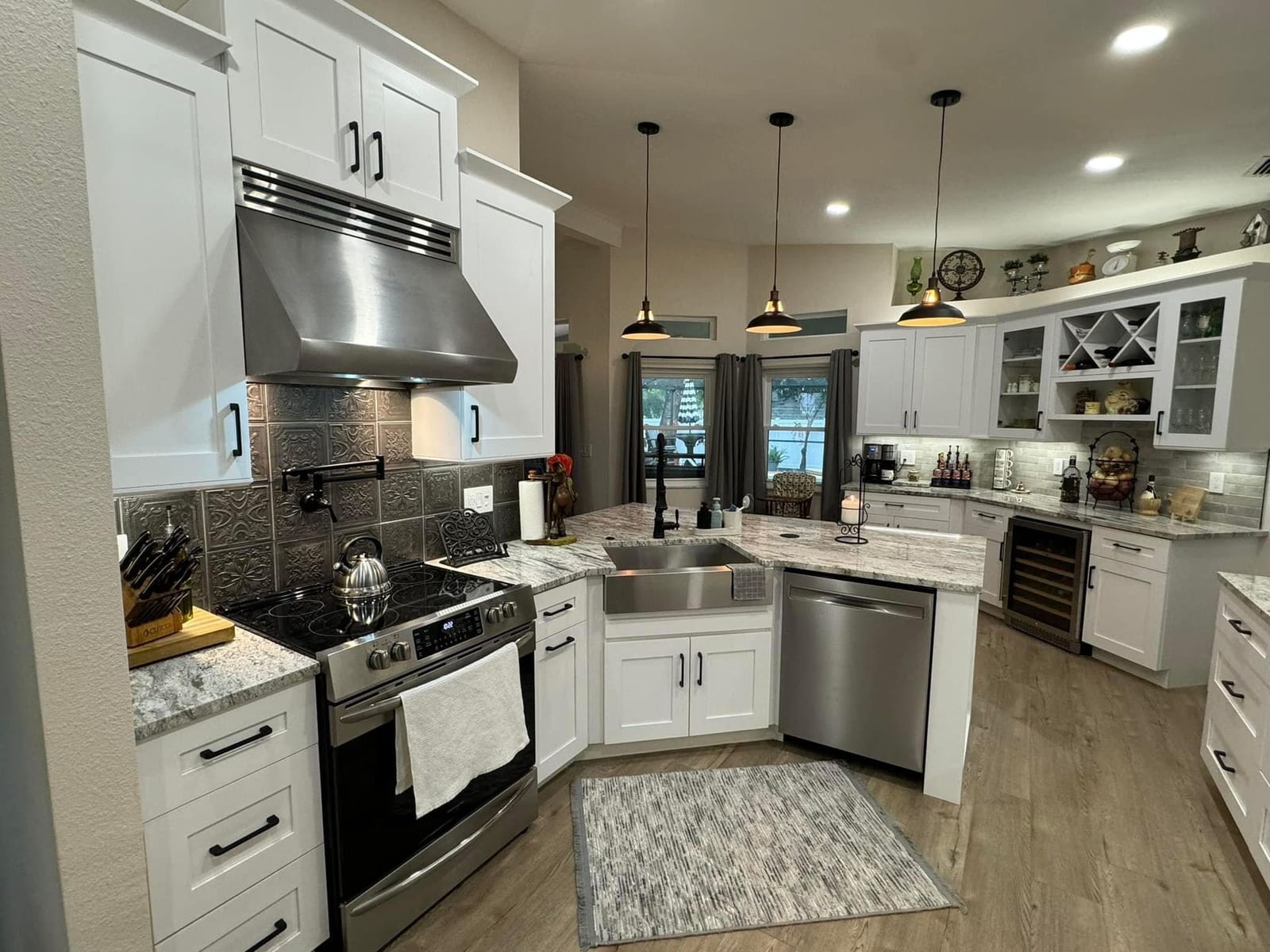
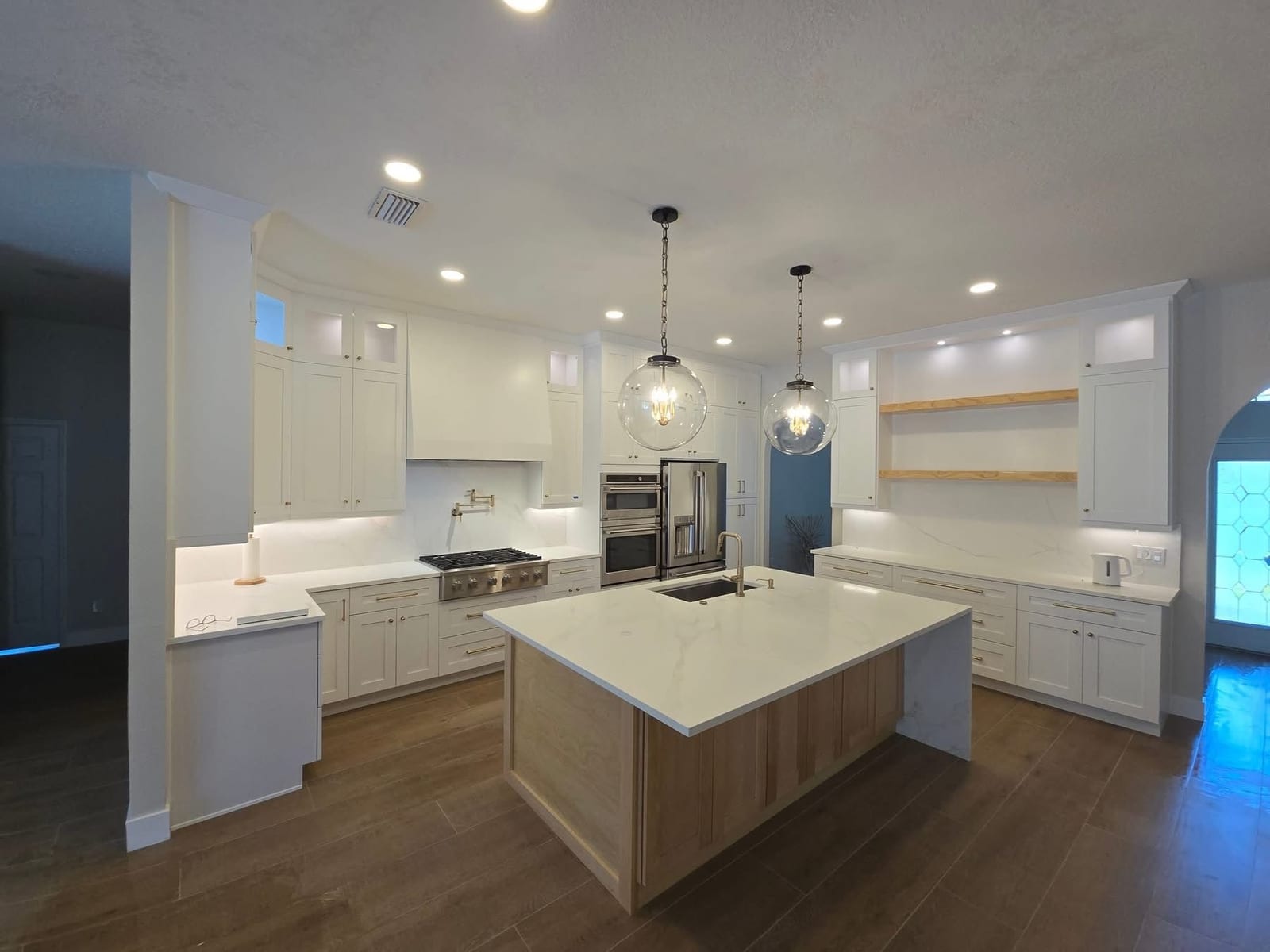
We are family owned and operated, licensed statewide by the Florida DBPR under EC13013571, and our crews are Tampa Bay locals who know the inspectors, the utility processes and the Florida Building Code requirements that trip up out-of-town contractors. The rough-in wiring through a framed home in Riverview pictured above and the temporary power pole in Lithia in our gallery are real projects, and the kitchen remodel lighting in our gallery shows the remodel side of the same work.
Temporary Power: The First Step on Every Site
Before framing can start on a lot without existing service, the site needs power for saws, compressors and the construction trailer. We set temporary power poles with a metered panel, GFCI-protected 120 volt outlets and a 240 volt outlet for larger tools, built to TECO's or Duke Energy's temporary service specifications and pulled under a temporary electrical permit. Once the pole passes inspection, the utility sets the meter and the crews have power. When the permanent service is ready, we coordinate the transfer and the removal of the pole. For remodels and additions on occupied homes, we work from the existing service and add a subpanel when the new load requires it.
Temporary power is also a good example of why permitting matters on a job site. An inspector will not sign off on a rough-in for a home fed by an unpermitted temporary pole, and the utility will not energize one. Getting this step right on day one keeps the whole schedule intact.
Rough-In: Everything Behind the Drywall
Rough-in is the phase that determines how well the house works for the next fifty years, and it is the phase nobody sees once the drywall goes up. Working from the plans and the Florida Building Code's adoption of the NEC, we set every box for outlets, switches, lights and fans; run the home runs from the panel; install the panel and any subpanels; and build the grounding electrode system. Kitchens get their dedicated 20 amp countertop circuits and appliance circuits, bathrooms and garages get GFCI-protected circuits, bedrooms and living areas get arc-fault protection, and the air conditioner, water heater, range and dryer get properly sized feeders. We run low-voltage conduit for data, and we stub out for anything you might add later.
We recommend every new home in Tampa Bay include an EV charger circuit or at least conduit to the garage, a generator transfer switch or inlet, and a surge protective device, which the 2023 NEC requires on new services anyway. A 200 amp service is the minimum we suggest for a modern home, and 400 amp makes sense for large custom homes with pools, workshops and multiple HVAC systems. We pass the rough inspection before insulation and drywall, and we document it for the builder. Smoke and carbon monoxide alarm locations, bathroom exhaust fans, the doorbell transformer and the low-voltage prewire for data, security and audio are laid out in the same pass, because adding any of them after drywall costs a great deal more.
Remodels and Additions Without Tearing Up the Whole House
Remodel electrical is a different discipline from new construction because the house is occupied and the existing wiring has to be understood before it is extended. Kitchen remodels are our most common: we pull new dedicated circuits for the range, cooktop, wall oven, microwave, dishwasher, disposal and refrigerator, add the countertop circuits and GFCI protection current code requires, relocate boxes for the new island and pendant layout, and install recessed and under-cabinet lighting. We sequence the work with the cabinet installer and drywall trade so nothing is opened twice. Bathroom remodels follow the same pattern with exhaust fans, heated floors and vanity lighting.
Additions, garage conversions, enclosed lanais and second stories typically need a subpanel fed from the main service, and sometimes a service upgrade if the existing panel is 100 amps or a problem brand; our panel upgrade page explains when that is required. We evaluate the existing service first so there are no surprises after the framing is up. Detached workshops, pool houses and ADUs get their own feeders, disconnects and in many cases their own subpanel.
Trim-Out, Final Inspection and What It Costs
After paint, we return for trim-out: devices and plates, fixtures, fans, the panel is finished and every breaker labeled, smoke and carbon monoxide alarms interconnected, and everything tested. Then the final inspection. Our goal on every project is to pass rough and final the first time, because a failed inspection costs the builder days. Complete electrical for a new single-family home in Tampa Bay typically runs $8 to $14 per square foot for a production-level spec, and more for custom homes with extensive recessed lighting, smart controls, a large service or a detached structure. Kitchen remodel electrical usually runs $2,500 to $7,000 depending on how many circuits and fixtures are involved, and additions are priced per plan.
We price from plans with an itemized proposal that separates service, rough-in, trim-out and any allowances, so builders and owners can see exactly where the money goes. Changes during construction are priced and approved before they are performed.
Detached Garages, Workshops, Barns and Accessory Dwelling Units
Tampa Bay's larger lots in Lithia, Plant City, Odessa, Land O' Lakes, Parrish and Myakka City mean detached structures are a big part of our new construction and remodel work. A detached garage or workshop needs a feeder from the main service sized for its real load, a subpanel with its own main disconnect inside the building, a grounding electrode system of its own, and the feeder run underground in conduit at the required depth. Workshops with welders, compressors, lifts and dust collection need 240 volt circuits and often a 100 amp or larger subpanel. We size it for what you will do in the building, not just what you are starting with.
Accessory dwelling units, which Tampa and several surrounding jurisdictions now permit more freely, are a full second electrical installation: their own panel, kitchen and bath circuits to code, interconnected smoke alarms, and either a subfeed from the main house or, where the owner wants separate billing, a second meter coordinated with TECO or Duke Energy. Pool houses and outdoor kitchens sit between the two, and anything near a pool brings in the clearance and bonding rules of NEC 680. Barns and agricultural buildings have their own article of the code, with wet-location wiring methods, corrosion-resistant equipment and GFCI requirements that reflect animals, water and washdown.
The common thread is planning the trench once. A single trench from the house to the structure can carry the power feeder, a conduit for data, a conduit for future solar or EV charging, and low-voltage for landscape lighting and cameras, and the cost difference between one conduit and four is small compared to digging twice. We walk the site with you or your builder, lay out the route around septic, irrigation and future plans, and call in utility locates before any digging starts. For the broader question of whether your existing service can support a new structure, see our panel upgrade page.
Send Us Your Plans
Builders, remodelers and owner-builders can send plans through our contact form or call (813) 897-2665 to talk through a project. Lightning Bay Electric works throughout Tampa Bay; see our service areas page for coverage and our reviews for what customers say about working with us.
The Work, Up Close

What Customers Say About Our New Construction & Remodel Electrical Work
I was going to call Michael directly, but I know how busy things can get, so I wanted to share my experience here. Jose recently completed a job for us, and I couldn't be more pleased with the service. He was professional, clean, and extremely organized throughout the entire process. What really stood out was his humility and problem-solving ability, he had to create a solution on the spot and handled it seamlessly without making it a big deal. That kind of attitude speaks volumes. Jose is a great representative of the company and clearly takes pride in his work. I truly appreciate the quality of service and the professionalism shown from start to finish. Highly recommend Lightning Bay Electric!
Exceptional work. The techs were amazing. Diligent, polite, offered advice and cleaned up when they were done. The kitchen and dining room lights look spectacular. The lanai fans perfectly installed. Finally the under cabinet lighting was the frosting on the cake, controlled remotely and multiple lighting variations. It looks fantastic in the evening. Thank you Lightning Bay Electric for a first class experience from start to finish.
Getting a quote to the completion of the project was simple, fast, and top quality. I know those 3 things usually do not happen together, but Mike and staff at Lightning Bay Electric are top notch!! Highly recommend them.
I've used Lightning bay for small jobs, and now for a larger one. They have been great to work with. Honest and knowledgeable. Highly recommended in the Tampa Bay Area.
Available Across All Five Tampa Bay Counties
Hillsborough County
Pasco County
Pinellas County
Polk County
Manatee County
New Construction & Remodel Electrical, Questions We Hear Every Week
How much does electrical cost for a new home in Florida?
Complete electrical for a new single-family home in Tampa Bay typically runs $8 to $14 per square foot for a production-level spec and more for custom homes with extensive recessed lighting, smart controls or a large service. A 2,000 square foot home generally lands between $16,000 and $30,000. We price from your plans with a detailed breakdown.
When do I need a temporary power pole?
Before framing starts, if the site has no existing service. A temporary pole gives the crews a metered 120/240V outlet panel that TECO or Duke can energize. We set the pole, build the panel with GFCI protection and pull the temporary service permit. When the permanent service is ready, we coordinate the transfer.
Can you wire a remodel without tearing up the whole house?
Yes. For kitchen and bath remodels we pull new dedicated circuits for the range, microwave, dishwasher, disposal and countertop outlets through the attic or open walls, add GFCI and AFCI protection, and tie into the existing panel or add a subpanel. We sequence with the cabinet and drywall trades so nothing has to be opened twice.
What does rough-in include?
Rough-in is everything inside the walls before drywall: boxes, cable or conduit, the panel, home runs and the grounding system. It is inspected before insulation and drywall. Trim-out happens after paint: devices, plates, fixtures, fans, breakers landed and labeled, and then the final inspection. We provide a clear schedule for both phases.
Should I prewire for an EV charger or generator during construction?
Absolutely. Running a conduit or a 60 amp circuit to the garage and a generator inlet or transfer switch stub during rough-in costs a small fraction of adding them later. We also recommend a whole-home surge device, which NEC 2023 requires on new services, and conduit for future solar. Plan it now and save later.
Need New Construction & Remodel Electrical Today?
Family owned, licensed and insured (FL EC13013571), 24-hour emergency service across Tampa Bay. Call (813) 897-2665 and talk to a real electrician.