
Hurricane Season: June 1 to November 30 · Tampa Bay, FL
Hurricane Electrical Prep for Tampa Bay Homes
What to do before the storm, during the outage and after the power comes back, from the family-owned electricians who install the generators and fix the damage. Printable checklist below.
Why Tampa Bay Is Different
Tampa Bay gets hit from two directions at once. The Gulf side, Pinellas, Apollo Beach, Ruskin and the Manatee River, takes storm surge and salt water into homes, docks and electrical equipment. The inland side, Brandon, Riverview, Wesley Chapel, Plant City and Lakeland, takes days-long outages when wind takes down TECO, Duke and Lakeland Electric distribution lines through tree-heavy neighborhoods. And every part of the region sits in the lightning capital of North America, so the surges that arrive with the first outer bands do as much damage to electronics as the wind does to roofs. The 2022 to 2024 seasons, Ian, Idalia, Helene and Milton, turned generator and surge-protection work from a niche into most of our summer calendar.
Before the Season: The Installations That Matter
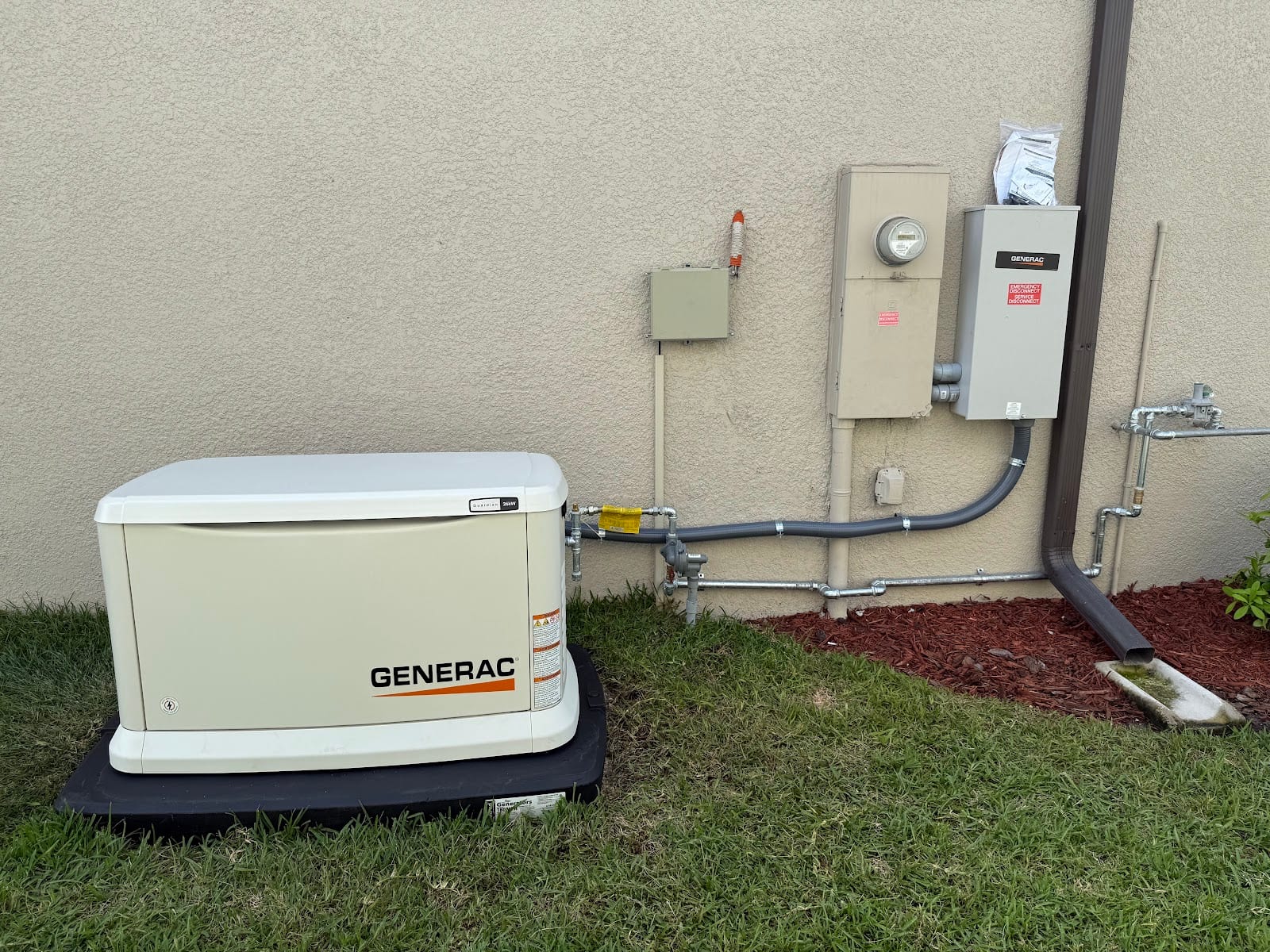
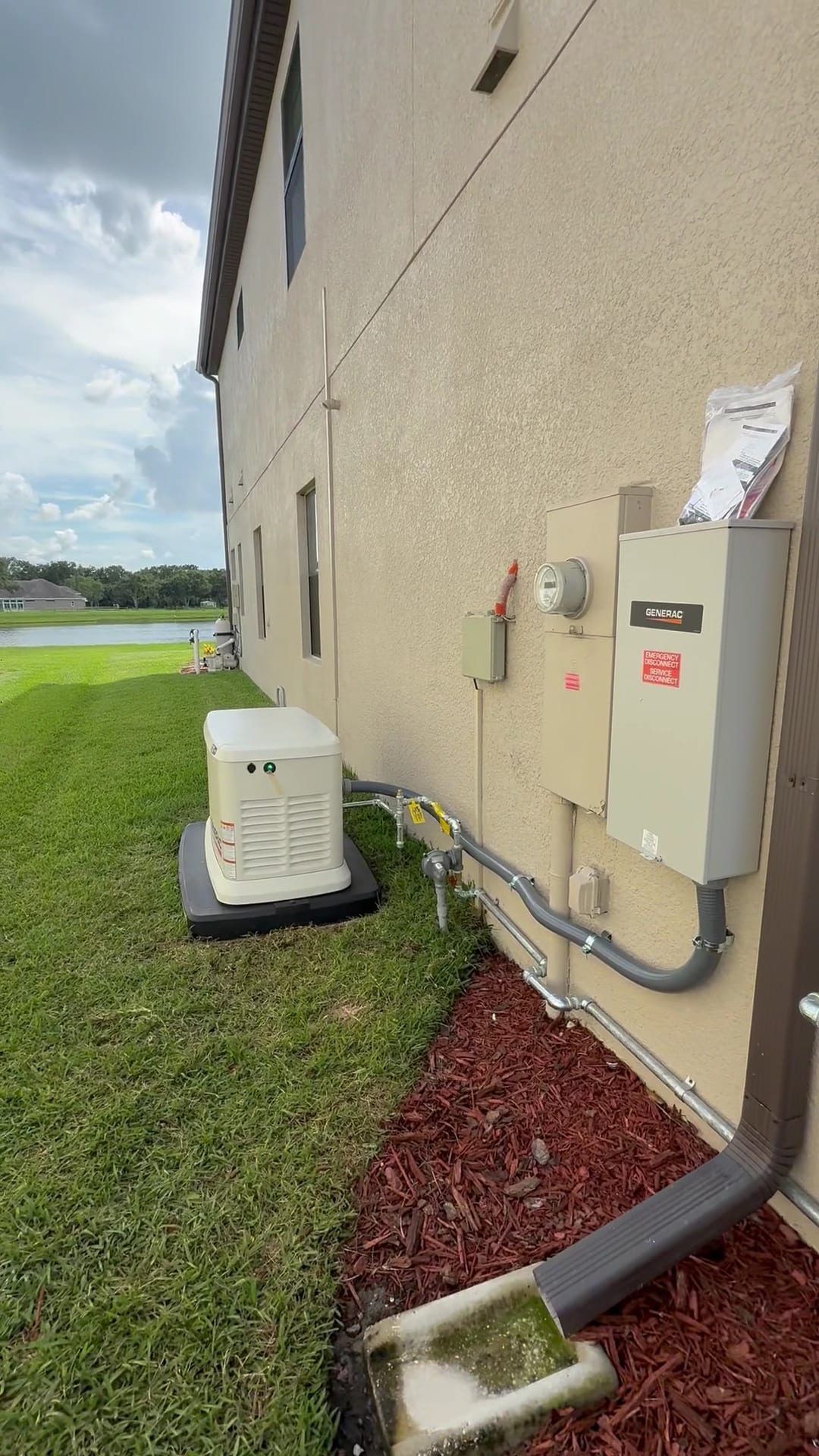
Backup power. The single biggest difference between a miserable week and a manageable one. A DuroMax portable generator on a properly installed inlet and transfer switch keeps the refrigerator, fans, lights, internet and a window unit running for a few thousand dollars installed. A standby generator from Generac or Kohler on natural gas or propane starts itself and runs the whole house, including central air, for several times that. We sell and install both as a DuroMax Authorized Dealer and Installer, and we size the system from a real load calculation rather than a guess.
Whole-home surge protection. A Type 2 surge protective device at the panel is the cheapest insurance in the house, typically a few hundred dollars installed, and the current electrical code requires one on new and replaced services for a reason. It absorbs the spikes that arrive with nearby strikes and with the utility's own restoration switching. Details on the surge protection page.
Panel and service check. A panel that is already marginal, a Federal Pacific or Zinsco unit, a corroded meter can on a coastal home, a double-tapped main, is the one that fails when the lights flicker on and off for an hour during restoration. A pre-season electrical inspection finds it in July instead of at 2 AM in September.
Elevate what you can. In flood-zone homes we mount generator inlets, transfer switches and, where the code and the utility allow, panels and disconnects above the base flood elevation. Dock and boat-lift electrical should have its own disconnect you can switch off before you leave.
48 Hours Before Landfall: Printable Checklist
- Charge everything: phones, power banks, laptops, cordless tools, the car
- Fill propane cylinders; top off gasoline only with stabilizer, and never store it indoors
- Test-run the generator under load for 15 minutes; confirm the inlet cord and transfer switch operate
- Freeze water jugs to keep the refrigerator and freezer cold longer when the generator cycles off
- Unplug TVs, computers, game consoles and anything with a circuit board, or confirm the panel surge protector's indicator shows it is healthy
- Photograph the panel, the meter and major appliances for insurance
- Know where the main breaker is and how to shut it off; label it if it is not labeled
- Turn off and disconnect power to the dock, boat lift, pool pump and sprinkler controller
- Check battery-powered CO and smoke alarms
- Save (813) 897-2665 in your phone; we answer 24 hours a day through and after the storm
During the Outage: Running a Generator Safely
Place the generator outdoors, at least 20 feet from the house, exhaust pointed away from doors, windows and soffit vents. Never in the garage, carport or lanai, even with doors open, and never under a window air conditioner. Connect only through the inlet and transfer switch; never through a dryer outlet or an extension cord into the panel. Start the generator, let it stabilize, then switch the transfer switch or interlock from utility to generator and bring loads on one at a time, largest motor first. Refuel only when the engine is off and cool. Keep a CO alarm in the room closest to the generator. Shed loads to stretch fuel: run the refrigerator a few hours at a time, run the AC or window unit when the house is closed up, and turn off the water heater unless you need it.
If you hear the generator straining or the lights dim when the AC starts, you are over its running capacity. Shut the AC off and call us when the roads are open; a soft-start kit on the condenser or a larger unit often fixes it for next time.
After the Storm: Before You Flip Anything Back On
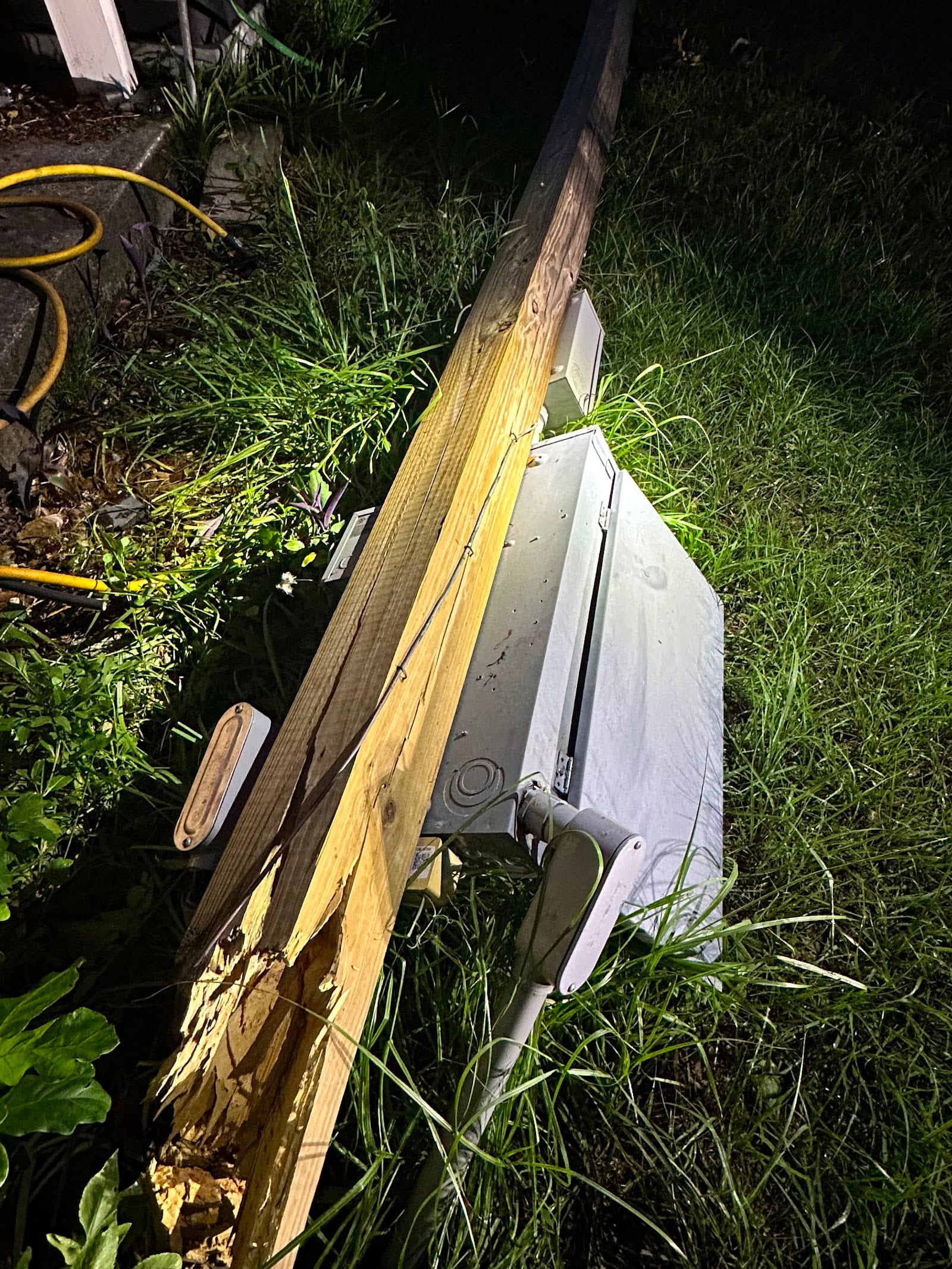
If water reached outlets, the panel, the meter, the water heater or the AC air handler, do not restore power until a licensed electrician has looked. Submerged breakers and receptacles must be replaced. Look at the meter can and the service mast: if the mast is bent, the weatherhead is pulled loose, or the conduit is cracked, the utility will not reconnect until a licensed electrician repairs it and the county inspects it; this is the most common post-storm job we do and we prioritize it. When power returns, watch for very bright or very dim lights, flickering, or half the house dead, which usually means a lost utility leg or neutral; shut the main off and call the utility and then us. Reset GFCIs and check the pool, dock and sprinkler circuits last.
Insurance and Permits
Every storm repair we do is permitted where a permit is required, photographed, and documented so your adjuster has what they need. Service mast and meter repairs, panel replacements and generator installs all leave a county record. Unpermitted post-storm work is a common reason claims stall, and it fails the 4-point inspection your carrier will eventually ask for. We also issue invoices that itemize labor and materials the way adjusters want to see them.
Storm-Ready Installs
Hurricane Electrical Questions
Should I turn off my main breaker before a hurricane?
If you evacuate, or if water is likely to reach the panel or outlets, yes: switch off individual breakers first, then the main. It prevents damage when the utility restores power with a surge and removes the electrocution risk in a flooded house. If you are staying and the home is not in a flood zone, leave power on but unplug sensitive electronics or rely on a whole-home surge protector.
Can I run a portable generator in the garage with the door open?
No. Carbon monoxide from a generator in a garage, carport, lanai or near an open window kills people after every Florida hurricane. Run it outdoors at least 20 feet from the house with the exhaust pointed away, and have battery CO alarms inside.
Can I plug my generator into a dryer outlet to power the house?
Never. That is back-feeding: it energizes the utility lines and can kill a line worker, and it can destroy the generator when power is restored. The legal, safe method is a generator inlet with a transfer switch or interlock kit, installed and permitted by a licensed electrician.
My power came back but some outlets or the AC do not work. What happened?
Partial restoration, a surge during restoration, or a lost utility leg are all common after storms. Check for tripped breakers and GFCIs first. If half the house is dead or lights are very bright or very dim, call the utility and then an electrician; a lost neutral or leg can damage appliances quickly.
Water got into my panel or outlets. Is it safe once it dries?
No. Salt or flood water leaves corrosion and conductive residue inside breakers, outlets and wire insulation. Equipment that was submerged should be replaced, not dried out, and the panel should be inspected by a licensed electrician before power is restored.
Does homeowner's insurance cover storm electrical damage?
Wind-driven and lightning damage is usually covered; flood damage is usually only covered under a separate flood policy. Either way, permitted repair records and photos from a licensed electrician make the claim far smoother. We provide both.
Trusted Before and After the Storm
Mike installed an EV charger at my home. Communication was great. He got to me quick and the install looks amazing. Highly recommend!
We've had a great experience with this electrical company. They're dependable, professional, and deliver high-quality results every time. We recommend them without hesitation.
We called/shopped around before deciding on Lightning Bay Electric to update our circuits and panel for our new pool. We couldn't be happier with the results. Extremely quick service and Mike was an absolute pleasure to do business with. We will be calling them for all our future electrical needs!
Get Storm-Ready Before the Cone Appears
Generator, surge protection and panel checks scheduled now beat the June rush.