
2026-04-14 · By Michael Tracy, Lightning Bay Electric · Tampa, FL
Electrical Safety Tips for Tampa Bay Homeowners Before, During and After Hurricane Season
The part people get wrong
Hurricane season runs June 1 through November 30, and the Tampa Bay area has had its share of close calls and direct hits in recent years. But the electrical dangers of a hurricane are not mostly about the wind. They are about what happens afterward: generators run in garages, downed lines in standing water, flooded panels that get re-energized, and the surge that arrives when TECO or Duke restores power to a neighborhood all at once. Nearly 20 years in this trade has taught me that the week after a storm is when we get the scary calls. This article is the checklist we give our own families, organized by before, during and after.
Before the season: the May checklist
Have your panel looked at. A licensed electrician can spot a failing breaker, a loose neutral, corrosion or a double-tap in fifteen minutes, and fixing it in May is cheaper than fixing it in September. Install a whole-home surge protective device if you do not have one; the restoration surge after an outage is exactly what it is built for. If you own a portable generator, run it under load for twenty minutes, check the oil, and confirm your transfer switch or interlock works. If you do not have a transfer switch, get one installed, because backfeeding through a dryer outlet is illegal and can electrocute a lineman.
Stock the electrical basics: a good flashlight per person, a battery lantern, a power bank for phones, spare batteries, and a plug-in carbon monoxide alarm with battery backup on every level of the house. Check your smoke and CO detectors. Know where your main breaker is and make sure you can reach it. If you have a dock, boat lift or pool, know where those disconnects are too. Trim trees away from the service drop to your house; the utility handles trees on their lines, but the drop to your meter is on you, and a limb on the service drop is one of the most common ways a house loses power in a storm.
When a storm is coming: the 48-hour list
Charge everything. Fill the generator's fuel and propane, and store gasoline outside the living space in approved containers. Set the refrigerator and freezer to their coldest settings. Unplug sensitive electronics you can live without, and consider shutting off the breakers for the AC, the water heater and the pool pump before the storm makes landfall so they do not take the hit when power flickers on and off, which it often does for hours before it fails entirely. If a surge is going to come, it is going to come then.
If you are in an evacuation zone and you leave, turn off the main breaker before you go. It is the single best thing you can do to protect the house from the restoration surge and from any water intrusion finding live circuits. Leave the refrigerator breaker on if the main is split, otherwise accept the food loss; a house fire is worse. Tell a neighbor where the panel is.
During the outage: generator rules that have no exceptions
Portable generators cause more hurricane deaths in Florida than the storms themselves in some years, and nearly all of those deaths are carbon monoxide. The rules: a portable generator runs outdoors only, at least 20 feet from the house, with the exhaust pointed away from every window, door and vent. Never in a garage, even with the door open. Never on a lanai or screened porch. Never under a carport or an overhang. Never near a window unit. CO is odorless and it puts you to sleep before it kills you. A battery CO alarm inside the house is your only warning.
Connect the generator only through a transfer switch or interlock, never through a dryer outlet or any other receptacle with a double-male cord. Use heavy-gauge outdoor cords rated for the load, and do not run them through standing water. Keep the generator dry; run it under an open canopy or a purpose-built generator tent, not in the rain. Let it cool before refueling, because gasoline on a hot muffler is how garages burn. Standby generators installed with proper clearances are built for all of this, which is one of their real advantages.
Downed lines and standing water
Treat every downed line as live. TECO and Duke lines can be re-energized remotely, and a line that was dead an hour ago may not be dead now. Stay well away, at least 30 feet, and keep children and pets inside. Never drive over a downed line. Never touch anything in contact with a line, including a fence, a vehicle or a puddle. Call the utility to report it and call 911 if anyone is in danger.
Standing water inside the house is an electrocution hazard if any circuit is live. If water has reached outlets or the panel, do not walk through it to get to the panel. Call the utility to disconnect at the meter, or call us. Flood water in a garage with a live water heater, a freezer or an extension cord is just as dangerous. Do not assume the power is out because your lights are off; a neighbor's generator backfeed or a partial restoration can make a wet house live.
After the storm: what to do before you turn things back on
If the main was off, do a walkthrough before you flip it. Look for water in or around the panel, water stains below outlets, and any smell of burning. If the panel or any outlets were submerged, do not energize them. Flooded breakers, receptacles and wiring are not dried out and reused; they are replaced, and an electrician needs to inspect the system before the utility reconnects. Salt water, which is what storm surge is in Tampa Bay, is far more corrosive than fresh water and damages conductors permanently. Hillsborough and Pinellas both require inspection before reconnection on storm-surge-flooded homes.
Once power is back, turn breakers on one at a time rather than all at once, starting with lighting and the refrigerator, and give the AC a few minutes after the others. If any breaker trips immediately, leave it off and call. Check that your surge protector's status light is still good, because it may have spent itself protecting you. Reset GFCI outlets. If your lights are noticeably brighter or dimmer than normal, or flickering, you may have a damaged neutral from the storm, which is a serious condition that can burn out appliances; shut the main off and call us.
Lightning strikes and the house
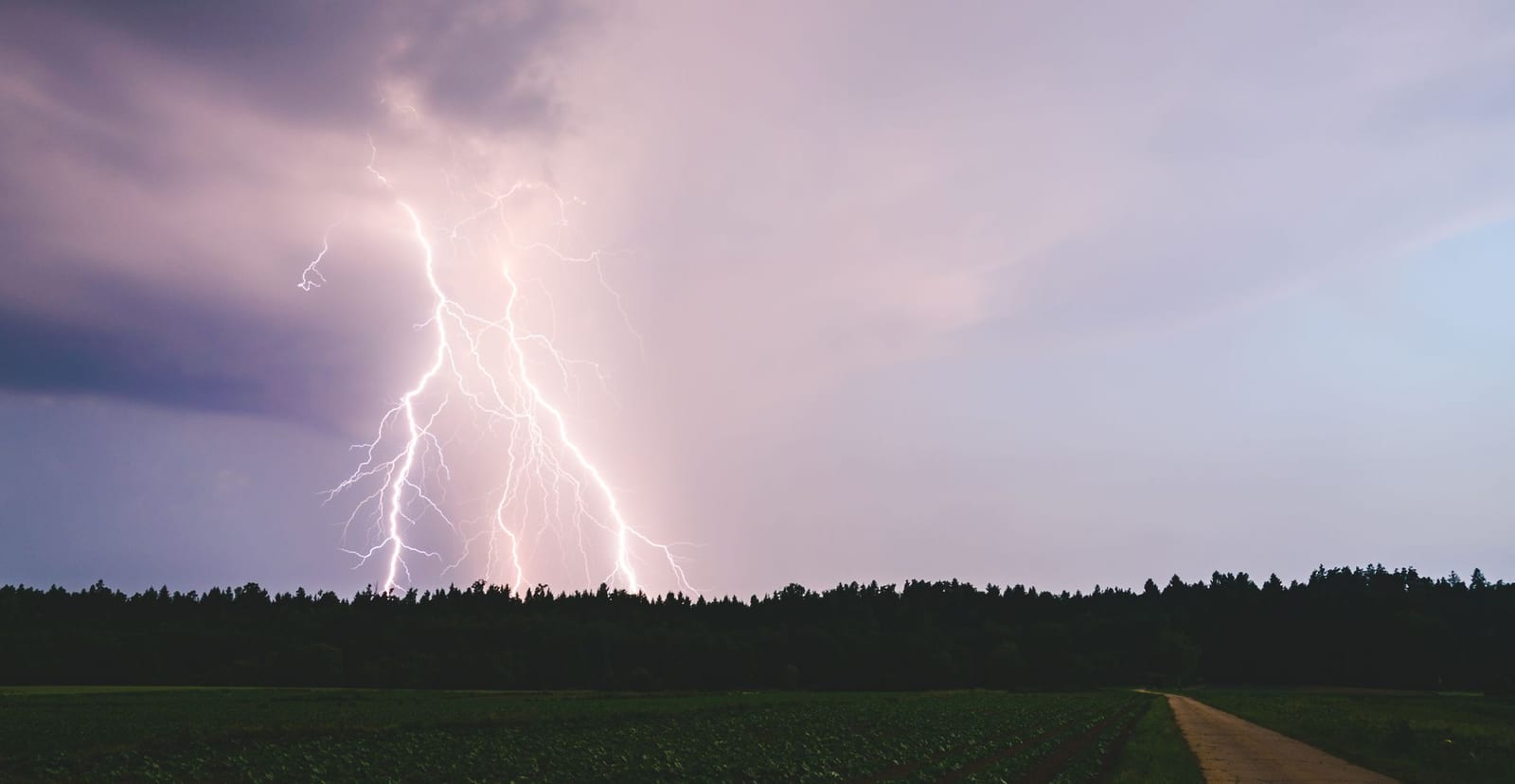
Hurricane season is also the peak of thunderstorm season, and a nearby lightning strike can do electrical damage with no wind at all. The signs of a strike on or near the house: a loud simultaneous flash and bang, tripped breakers throughout the panel, dead electronics in several rooms, a smell of ozone or burning, GFCI outlets that will not reset, and sometimes a pinhole in the roof or a scorched tree nearby. If you suspect a strike, shut off the main, walk the attic if it is safe and look for any smoke or smell, and call both the fire department if there is any sign of fire and an electrician to inspect the panel, the grounding system and the surge protector before re-energizing. Strikes can damage insulation inside walls in ways that do not show up for weeks, so an inspection after a known strike is worth the visit.
Frequently asked questions
Q: Should I turn off my main breaker during a hurricane? If you evacuate, yes. If you shelter in place, we recommend turning off the breakers for the AC, water heater and pool pump and leaving the rest on until you lose power. Once the power is out, turning off the main protects you from the restoration surge.
Q: Is it safe to use a generator in the garage if the door is open? No. This is the single most common fatal mistake. CO accumulates in a garage in minutes and flows into the house. Outdoors, 20 feet away, exhaust pointed away from the house. No exceptions.
Q: My power came back but some outlets do not work. What happened? Commonly a tripped GFCI, a tripped AFCI breaker, or a surge-damaged device. Reset the GFCIs and breakers first. If that does not fix it, call. If the outlets are on a circuit that got wet, do not keep resetting.
Q: Can I plug my refrigerator into a generator with a regular extension cord? Use a heavy-gauge outdoor-rated cord, 12 gauge or larger, as short as practical, and never through a window you cannot close. Better yet, a transfer switch powers the refrigerator circuit directly.
Q: How do I know if my panel was damaged by a surge? Scorch marks, a burnt smell, breakers that will not reset, or multiple dead circuits are the signs. If you see any, leave the main off and call an electrician.
We are here 24 hours during storm season
Lightning Bay Electric runs 24-hour emergency service across Tampa, Brandon, Riverview, Apollo Beach, Wesley Chapel, St. Petersburg, Clearwater and the surrounding counties, and we are on the road as soon as it is safe after a storm. For a pre-season panel check, a surge protector or a generator transfer switch, or for storm damage, visit our emergency electrician page or call (813) 897-2665.