
2026-03-24 · By Michael Tracy, Lightning Bay Electric · Tampa, FL
The 4-Point Inspection Electrical Section: What Florida Insurers Look For and How to Pass
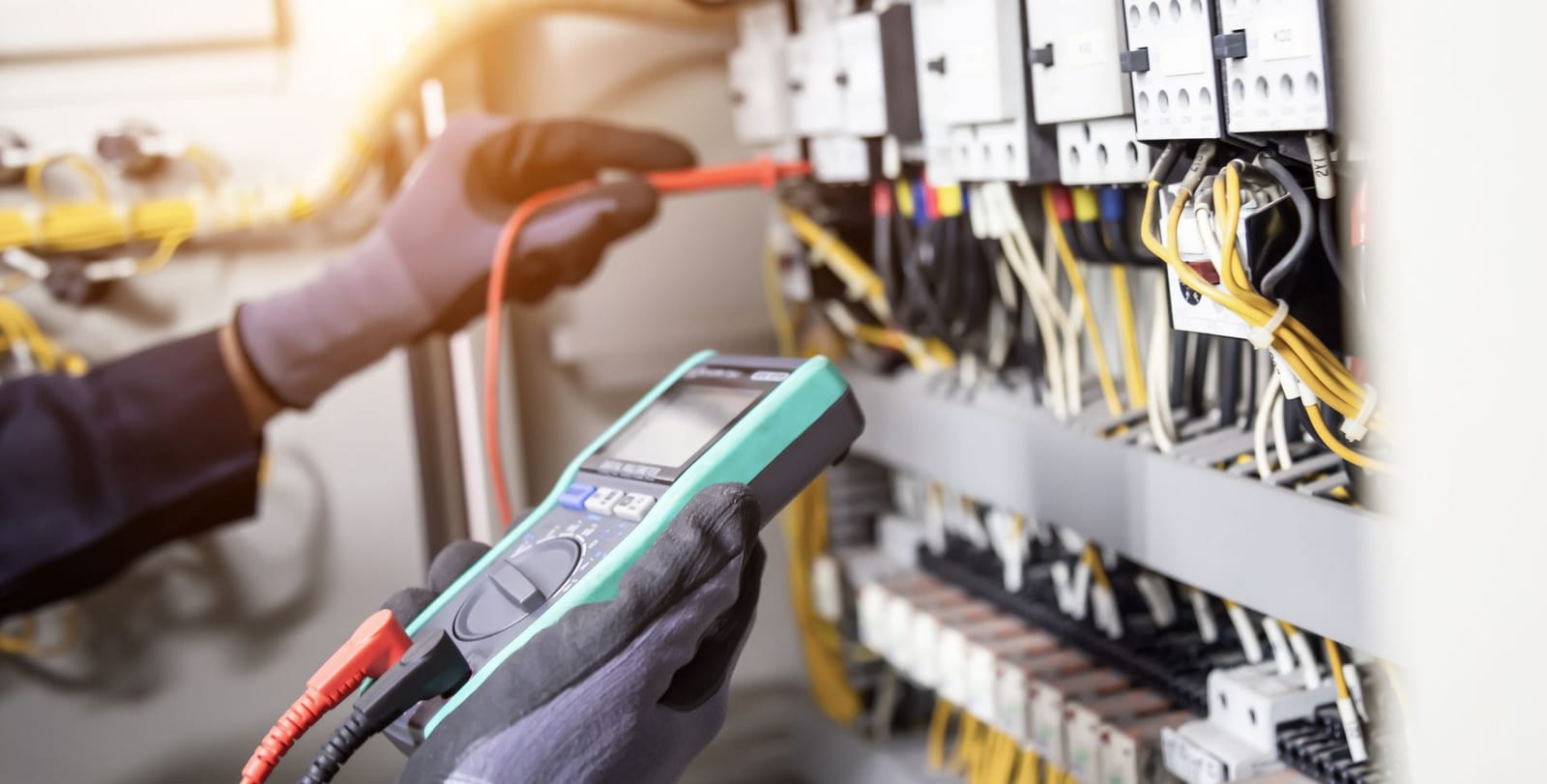
What a 4-point inspection is
A 4-point inspection is a short report on the four systems insurers care most about in an older home: roof, electrical, plumbing and HVAC. Florida carriers generally require it to write or renew a policy on a home that is roughly 30 years old or older, though some ask at 20 or 25 years and some ask regardless of age when the prior policy lapsed. It is not a full home inspection. It is a screening tool, usually a standardized form with photos, completed by a licensed home inspector, general contractor or, for the electrical section, a licensed electrical contractor.
The electrical section is the one that trips up Tampa Bay homeowners most often, because it asks very specific questions and because the answers are often no for a home built in the 1960s, 1970s or 1980s. We are asked to fix failed electrical sections every week, often on a deadline from the carrier, so we know the form well.
What the electrical section asks
The standard form, which most carriers in Florida accept in some version, asks the inspector to record the service size in amps, the panel brand, the wiring type, and the year of the last electrical update, then to answer a series of yes or no questions. Is the panel a Federal Pacific, Zinsco, Sylvania, Challenger or other brand known for problems? Is there aluminum branch wiring? Is there knob-and-tube wiring? Is there cloth-covered wiring? Are there any double-tapped breakers, meaning two wires under one breaker terminal not rated for it? Are there open junction boxes, exposed wiring or missing covers? Are there any scorch marks, corrosion or signs of overheating in the panel? Are there GFCI outlets where required? Is the service at least 100 amps? Is there any visible hazard?
The inspector photographs the panel with the cover off, the panel label, the meter, a representative outlet, and anything they flag. A single yes on the hazard questions is usually enough for a carrier to require correction before binding.
The items that fail most often in Tampa Bay
Panel brand is the number one failure. Federal Pacific Stab-Lok and Zinsco panels are in a large share of homes built between 1955 and 1985 across Tampa, St. Petersburg, Clearwater, Largo and Brandon, and nearly every carrier declines them. Replacement is the only fix and typically runs roughly $2,500 to $4,500 for a like-for-like panel, more if the service entrance also needs replacement.
Aluminum branch wiring is the number two failure in homes from roughly 1965 to 1973, which covers a great deal of Town 'n' Country, Carrollwood, Temple Terrace, Pinellas Park and Seminole. Carriers generally accept remediation with approved connectors at every connection point, which we cover in our aluminum wiring article, rather than requiring a full rewire. Double-tapped breakers are the number three failure and the cheapest fix; they show up in almost every panel that has been worked on by a handyman. An electrician can correct them in an hour. Missing panel covers, open junction boxes in the attic and garage, ungrounded three-prong outlets, and missing GFCI protection at sinks and outdoors round out the list. Each is a quick fix if you know what the form wants.
What inspectors cannot see but carriers still care about
A 4-point inspector is looking at visible conditions. They do not test every outlet, trace every circuit, or inspect inside walls. That means a panel that looks clean can pass while a hidden problem remains, and it means a panel with cosmetic corrosion can fail while being electrically fine. It also means the inspector's judgment matters. Some inspectors flag every double-tap; some flag only the ones on breakers not rated for it. Some flag any aluminum wiring; some note remediated aluminum as acceptable.
This is why having a licensed electrician look at the panel before the 4-point is worth the service call. We can correct the easy items in the same visit, document the panel brand and wiring type accurately, and give you a letter on our letterhead, under license FL EC13013571, stating the condition of the system and the corrections made. Carriers and underwriters respond well to that letter because it comes from a licensed contractor who accepts responsibility for the statement.
How to prepare before the inspector arrives
Make the panel accessible, with nothing stored in front of it and a clear path. Replace any missing knockout plugs or breaker filler plates, which are a few dollars at any supply house and are a common flag. Make sure every outlet and switch has a cover plate. Test your GFCI outlets with the test button and make sure they trip and reset. Check that there are GFCI outlets within six feet of every sink, in the garage, outdoors and in the laundry; if not, have them installed, which typically runs roughly $150 to $250 per location. Remove any extension cords being used as permanent wiring. Close any open junction boxes in the attic with proper covers. If the house has ceiling fans on old light-fixture boxes, or outlets that wobble in the wall, those are worth fixing too; our outlets, switches and ceiling fans service handles that in the same visit, and inspectors do note loose devices.
If you know you have a flagged panel brand or aluminum wiring, do not wait for the inspection to fail. Fix it first and have the permit and inspection closeout in hand, then schedule the 4-point. A passed 4-point with a fresh permitted panel is the best possible file to hand an underwriter.
What corrections cost
Correcting double-tapped breakers, adding filler plates, replacing missing covers and closing junction boxes typically runs roughly $150 to $400 for a service visit. Adding GFCI protection at each required location typically runs roughly $150 to $250 per outlet, or less per location when done as a batch. Aluminum wiring remediation with approved connectors typically runs roughly $1,500 to $4,000 for a whole house depending on the number of devices. Panel replacement typically runs roughly $2,500 to $4,500, or $4,000 to $7,000 with a full service entrance. A full rewire for a home with deteriorated wiring typically runs roughly $12,000 to $25,000 and up. We give a written quote for each item so you can fix what the carrier requires first and schedule the rest.
What the inspector writes down, line by line
It helps to know what the form actually looks like. The electrical section of the common Florida 4-point form has a header where the inspector records the main panel brand and model, the service amperage, the voltage, the number and type of panels, and whether the wiring is copper, aluminum, cloth, or knob-and-tube, with photos required for the panel label and the open panel. Below that is the list of conditions with yes or no boxes and a comment field, and at the bottom the inspector gives an overall rating of the electrical system as satisfactory or unsatisfactory with an estimated remaining life.
Two things matter about that structure. First, the brand and wiring-type entries are facts, and the underwriter reads them directly; an inspector who writes Federal Pacific or aluminum has ended the conversation regardless of the condition boxes. Second, the condition boxes are judgment, and an inspector who is handed a clean panel with filler plates in place, no double-taps, a typed directory and a recent permit sticker is going to check the satisfactory box. We make sure the panel looks like that before the inspector opens it.
Wind mitigation is a different inspection
Homeowners often confuse the 4-point with the wind mitigation inspection, which is the other report Florida carriers ask for and which is about the roof, the roof-to-wall connections, the roof covering and the opening protection. It has nothing to do with electrical, and passing one has no effect on the other. If your agent asks for both, schedule them together but understand they are separate documents with separate fixes.
Frequently asked questions
Q: Who can do a 4-point inspection in Florida? A licensed home inspector, general contractor, or a licensed contractor in the relevant trade. For the electrical section specifically, a licensed electrical contractor can complete and sign it, and many carriers prefer that for older homes.
Q: How long is a 4-point inspection valid? Typically one year, though some carriers accept up to two or three. Ask your agent.
Q: My 4-point failed for the panel. How fast can it be replaced? Usually within one to two weeks including the permit and utility scheduling, and faster when the carrier has set a hard deadline. Call us as soon as you get the letter.
Q: Does a 4-point inspection check the wiring inside the walls? No. It is a visual inspection of accessible components. The inspector identifies wiring type from the panel and from visible runs in the attic or garage.
Q: Will correcting the electrical section lower my premium? It removes the reason for a declination and can open access to better carriers. Some carriers price a new panel or a remediated home favorably, but we cannot promise a specific rate.
Pass it the first time
If you have a 4-point coming up, or you already have a failed one, Lightning Bay Electric can inspect the panel, correct the flagged items, and document everything for your carrier. We serve Tampa, St. Petersburg, Clearwater, Largo, Pinellas Park, Brandon, Riverview, Wesley Chapel and Lakeland; see our full service areas. Learn more on our electrical inspections page or call (813) 897-2665.