
2026-05-26 · By Michael Tracy, Lightning Bay Electric · Tampa, FL
Aluminum Wiring in 1970s Florida Homes: How to Tell, Why It Matters and What to Do
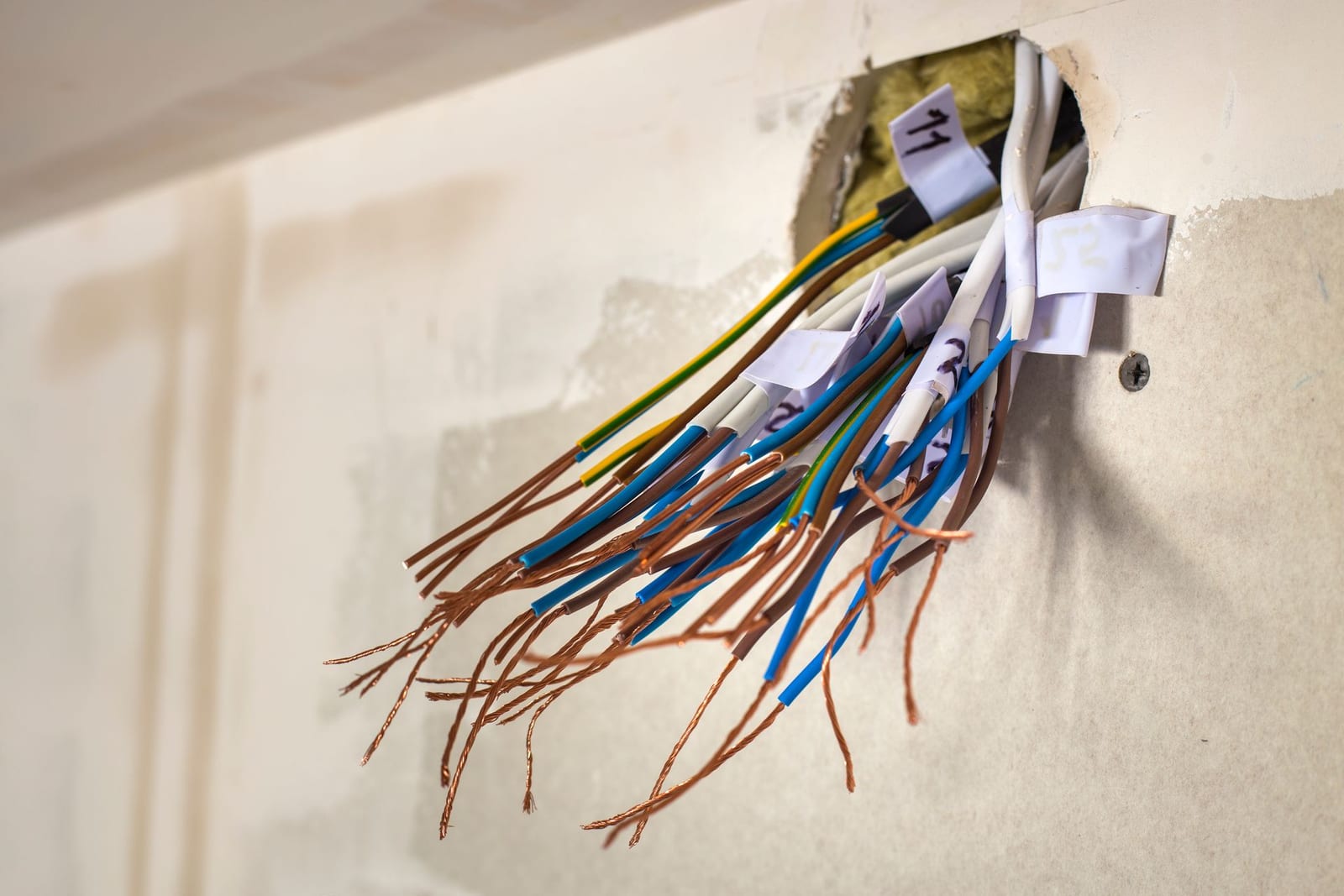
Why so many Tampa Bay homes have it
In the mid 1960s the price of copper spiked and builders switched to aluminum for branch circuit wiring, the 15 and 20 amp circuits that feed outlets, switches and lights. Aluminum was cheaper and it was approved. Between roughly 1965 and 1973, an enormous number of homes were built with it, and Tampa Bay was growing fast in exactly those years. Town 'n' Country, Carrollwood, Temple Terrace, parts of Brandon, Pinellas Park, Seminole, Largo, Clearwater, the older sections of Lakeland and Winter Haven, and a great many condos and duplexes across the region have original aluminum branch wiring.
Aluminum is still used today, safely, for large conductors: your service entrance, your feeder to a subpanel, and your AC or range circuit are very likely aluminum and that is fine. The problem was never aluminum itself. The problem was small-gauge aluminum landed on devices and connectors designed for copper.
What actually goes wrong
Aluminum expands and contracts with heat more than copper does. At every connection, every outlet, every switch, every wire nut and every breaker terminal, the wire grows and shrinks with each cycle of load, and over thousands of cycles the connection loosens. Aluminum also oxidizes, and aluminum oxide is a poor conductor, so the loosened connection gets more resistive, which makes it hotter, which loosens it more. It is also softer than copper and gets nicked and crushed under screw terminals. The end state is a connection that heats up behind an outlet cover until the insulation chars and, in the worst case, the wall catches.
Federal safety research decades ago found that homes with original aluminum branch wiring were significantly more likely to reach fire-hazard conditions at outlets than homes with copper. In Florida, where the AC runs nine months a year and devices cycle constantly, and where humidity drives oxidation, we see it regularly: outlets warm to the touch, melted receptacle backs, discolored plates, and the faint burnt smell that homeowners describe as fishy.
How to tell if you have it
Check the year first. A home built between 1965 and 1973 is the prime window, with some as late as 1975. Then look in the panel, with the cover on: the visible ends of the branch wires at the breakers will be dull silver rather than copper-colored. Look at the cable jacket where it is visible in the attic or garage: aluminum cable is often marked AL, ALUM or ALUMINUM on the sheath every few feet. Pull an outlet cover, with the breaker off, and look at the wire on the terminal screws; silver is aluminum.
Do not confuse it with tinned copper, which was common in cloth-covered 1940s and 1950s wiring and looks silver but is copper underneath. And do not confuse a large silver service or AC conductor with branch wiring. If you are not sure, send us a photo of the open panel and we will tell you. A 4-point inspector will find it either way, so it is better to know.
Option one: remediation with approved connectors
The fix that Florida insurers generally accept, and that the federal safety guidance recognizes, is to make every aluminum-to-device connection in the house into a permanent aluminum-to-copper splice using a listed connector, then land copper pigtails on the devices. There are two widely accepted methods. The first uses a special crimp connector applied with a calibrated tool; this method has the longest track record and is the one most underwriters name specifically. The second uses a listed aluminum-to-copper lug-style connector, which is newer and also widely accepted. Ordinary purple wire nuts marked for aluminum are not considered a permanent remediation by most inspectors and insurers, and we do not use them for this purpose.
Remediation means opening every outlet, switch, fixture box and junction box in the house, which in a typical 1970 three-bedroom home in Carrollwood is roughly 60 to 100 connection points. It also means replacing the devices with new ones, because the old ones have been heat-stressed. Whole-house remediation typically runs roughly $1,500 to $4,000 in Tampa Bay depending on the count, access and ceiling fixtures. It is a one to two day job and it requires a permit and inspection in most jurisdictions.
Option two: full rewire
The other fix is to replace the aluminum branch wiring with copper entirely. This is the permanent answer and the one that removes the question from every future inspection. It is also the expensive one, typically roughly $12,000 to $25,000 for a single-story Tampa Bay home including a new panel, and more for two stories or plaster ceilings. We recommend a rewire over remediation when the aluminum wiring is also showing deteriorated insulation, when there have already been overheating incidents, when the panel needs replacement anyway and the house needs more circuits, or when the homeowner plans to stay for decades and wants to be done with it. Our home rewiring article covers what that job involves.
What insurers in Florida want
Most Florida carriers will not write a home with untreated aluminum branch wiring. Most will write it after remediation with an accepted method, documented by a licensed electrical contractor with a permit closeout and often a letter on letterhead. A few carriers require a full rewire and accept nothing less. Your agent can tell you which kind of carrier you have. We provide the documentation package, including before and after photos and the connector method used, because the underwriter will ask.
For buyers: if you are under contract on a 1965 to 1973 home in Tampa Bay, have the aluminum question answered before the inspection period ends. Remediation cost is a normal negotiation item, and a seller who has already done it with documentation has a much easier sale.
What not to do
Do not simply replace the outlets with new copper-rated devices; standard devices marked CU only are not rated for aluminum and the problem returns. CO/ALR rated devices are an improvement but are not considered a remediation by insurers. Do not let a handyman twist copper pigtails onto aluminum with ordinary wire nuts. Do not ignore a warm outlet or a burnt smell because the house has been fine for fifty years. And do not pay for a full rewire if remediation will satisfy your carrier and the wiring is otherwise sound; a good electrician will tell you which you need.
What remediation day looks like
Homeowners ask what they should expect when we remediate a whole house, so here is the sequence. We pull the permit first. On the day, we shut off circuits one at a time, remove every outlet, switch and fixture on the circuit, clean and inspect the aluminum conductor ends, cut back any heat-damaged insulation, and install the listed connector with a copper pigtail using the manufacturer's tool and torque. We install a new device, either a standard copper-rated receptacle or a tamper-resistant one where NEC 2023 requires it, and a new cover plate. In the panel, every aluminum branch conductor gets the same treatment at the breaker and at the neutral bar, with antioxidant compound where the connector requires it. Ceiling fixtures and fan boxes are done from a ladder, and the attic junction boxes are done last.
We photograph a representative sample of the connections before and after, log the count, and provide the documentation package with the permit closeout. A typical three-bedroom home is finished in a day and a half, and you have power in most of the house the whole time. If we find a circuit where the aluminum has been overheated badly enough that the conductor is brittle back into the cable, we tell you, because that circuit is a rewire candidate rather than a remediation candidate and a responsible contractor does not pretend otherwise.
Frequently asked questions
Q: Is aluminum wiring illegal in Florida? No. Small-gauge aluminum branch wiring is no longer installed, but existing installations are legal. The issue is insurability and safety, not legality.
Q: How long does aluminum wiring remediation take? One to two days for a typical single-story home, plus the inspection.
Q: Does remediation last? The accepted crimp and lug methods are permanent when done correctly with the proper tools. The connection is aluminum to copper in a listed connector, and the device sees only copper.
Q: My condo has aluminum wiring. Is that the association's problem or mine? Branch wiring inside your unit is normally your responsibility, while the feeders and common areas are the association's. Check your documents, because many Tampa Bay condo associations from that era have addressed it building-wide.
Q: Can I just do the outlets that feel warm? A warm outlet should be fixed immediately, but partial remediation does not satisfy an insurer and leaves the same failure mode at every other connection. Do the whole house.
Q: Does remediation cover light fixtures and ceiling fans too? Yes. Every connection point on the aluminum circuits is included, and fan boxes are checked for proper fan-rated support at the same time, which is a common find in 1970s homes. See our outlets, switches and ceiling fans page for that side of the work.
Find out what you have
If your home is from the aluminum era, Lightning Bay Electric will confirm what you have, explain both fix options with a line-item quote for each, and give you the documentation your carrier needs. We serve Tampa, Carrollwood, Temple Terrace, Brandon, Pinellas Park, Seminole, Largo, Clearwater and Lakeland. Learn more on our home rewiring page or call (813) 897-2665.