
2026-08-20 · By Michael Tracy, Lightning Bay Electric · Tampa, FL
Dock and Boat Lift Electrical Safety for Tampa Bay Waterfront Homes
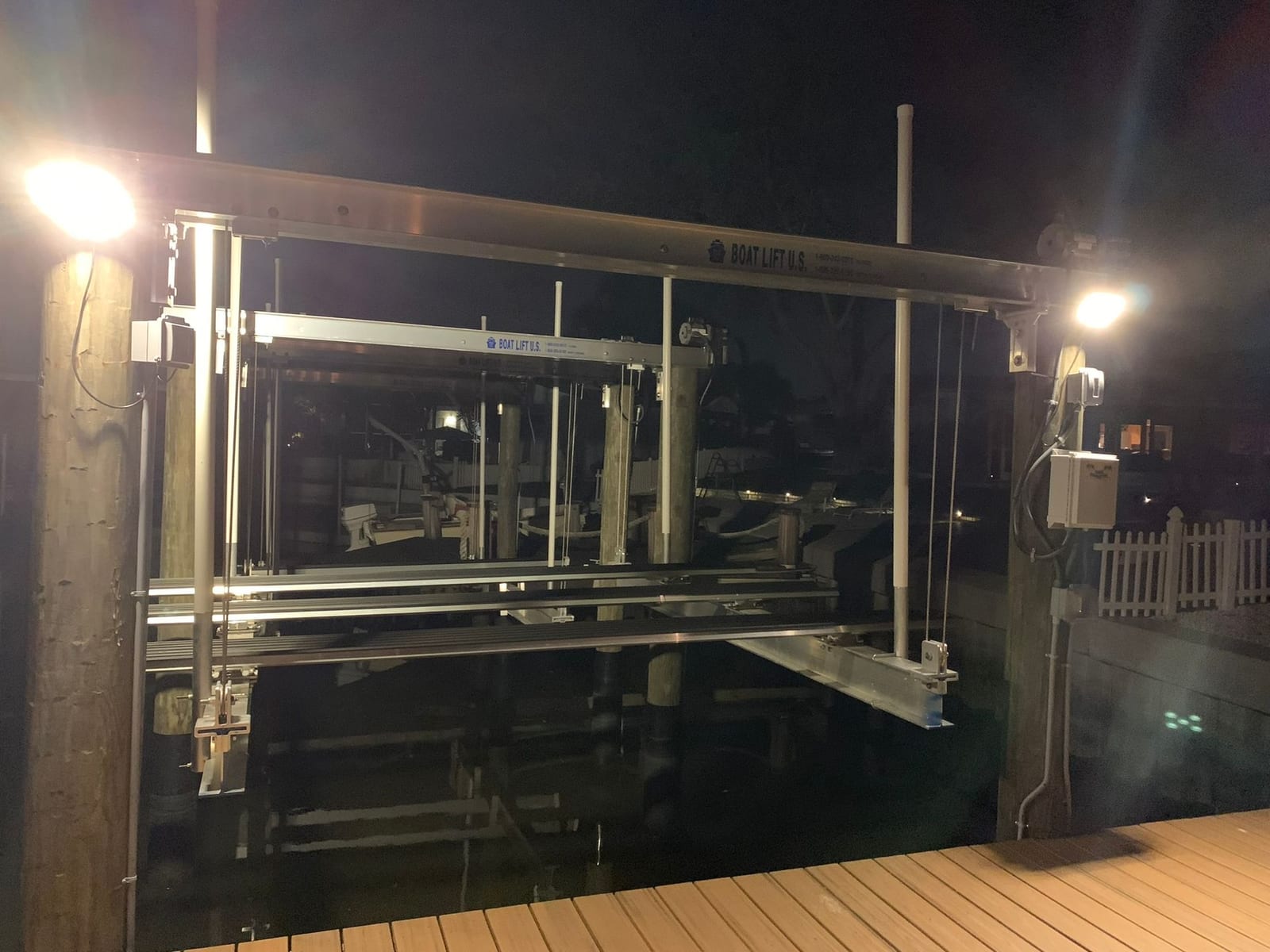
Why dock electrical deserves more respect than it gets
Tampa Bay has thousands of miles of canal and bay frontage, from the Apollo Beach and Ruskin canals to Davis Islands, Shore Acres, Snell Isle, Treasure Island, Dunedin, Palm Harbor and the Manatee River. Nearly every waterfront home has a dock, most have a boat lift, and a great many have shore power, dock lighting, fish-cleaning stations and water pumps out there too. That is a lot of electricity sitting a few feet above salt water in the most corrosive environment a residential electrical system ever sees.
The danger that most people have never heard of is electric shock drowning, or ESD. When a dock's electrical system leaks current into the water, whether from a failing lift motor, a corroded shore power pedestal, or a boat with a wiring fault plugged into shore power, the water itself becomes energized in a gradient around the leak. A swimmer in that gradient does not get a visible shock. Their muscles simply stop working, and they drown. In fresh water the gradient extends farther, and most of the documented cases are in lakes and rivers, but Tampa Bay's brackish canals and the freshwater lakes across Polk and Pasco counties both carry real risk. There is a reason the rule on every marina sign is no swimming near docks.
What the code requires on a dock
NEC Article 555 governs marinas, boatyards and docking facilities, including private residential docks, and NEC 2023 tightened it. The key requirements: ground fault protection for every receptacle and every branch circuit on the dock, with the main feeder to the dock protected by a ground fault device set at no more than 30 milliamps, and receptacles protected at the standard 5 milliamps; a disconnect at the shore end so the entire dock can be de-energized from land; wiring methods and enclosures rated for the wet, corrosive location; conductors rated for the environment; a bonding system that ties the metal of the dock, the lift and the pedestals together and back to the house grounding system; and specific clearances and mounting heights for receptacles above the waterline and the deck.
NEC 2023 also requires signage at the dock warning of the shock hazard and prohibiting swimming within a set distance of the electrical equipment. And it requires the ground fault protection on the feeder to be a device that actually trips on a 30 milliamp leak, which is the safeguard against energized water. In Hillsborough, Pinellas, Pasco and Manatee counties, a new dock electrical installation is permitted and inspected, and the inspector checks all of the above.
Boat lift wiring done right
A boat lift is a pair of motors, typically 1 to 1.5 horsepower each, a control switch or a remote control box, and a feeder sized for the load. In Tampa Bay the lift is almost always 240 volt single-phase, and the feeder is commonly a 20 or 30 amp circuit. The control box and the motors must be rated for the marine environment, and the disconnect must be within sight of the lift so it can be shut off while someone works on it. The most common failures we see are motor bearing and winding failures from corrosion, control relay failures, and feeder conductors that were run in the wrong type of conduit or with indoor-rated cable that salt air has destroyed.
Cost: a new boat lift electrical circuit from the house panel to the lift, with a marine-rated disconnect, GFCI protection, proper conduit and conductors, and the permit, typically runs roughly $1,200 to $3,000 depending on distance from the panel and whether the run can go along the seawall or needs to be trenched. A dock subpanel, which is the right answer if you have a lift plus lighting plus shore power plus a pump, typically runs roughly $2,000 to $4,500 including the feeder and the shore-end disconnect. Lift motor and control replacement is usually a lift company's job, but we handle the wiring and the disconnect.
Shore power and the boat's own wiring
A 30 amp or 50 amp shore power pedestal on a private dock is a marina-grade device, and it needs a marine-rated receptacle and a GFCI breaker matched to it. The danger with shore power is often the boat, not the dock. A boat with a reversed polarity, a failed galvanic isolator, or a chafed wire can leak current through the shore power ground into the water, and a dock GFCI is what catches it. If your dock's ground fault protection trips every time a particular boat plugs in, that boat has a fault and the trip is saving someone's life. Do not bypass it; get the boat looked at.
Pedestals in Tampa Bay salt air corrode fast. We recommend stainless or corrosion-resistant pedestals, an annual inspection of the receptacle contacts and the cover gaskets, and replacing any pedestal that shows green corrosion on the terminals. A new 30 or 50 amp shore power pedestal with GFCI protection typically runs roughly $800 to $2,000 installed on an existing dock circuit.
Dock lighting, underwater lights and pumps
Dock and seawall lighting is where most Tampa Bay waterfront projects start, and it is where the most shortcuts get taken. Low-voltage LED systems running on a transformer at the shore end are the safest and most practical choice for dock and path lighting, and a good transformer with a marine-rated cable typically runs roughly $600 to $1,500 installed plus fixtures. Underwater green fishing lights are popular on canals from Apollo Beach to Gulfport; they should be low-voltage, listed for submersion, and fed from a GFCI-protected circuit, and we see far too many that are 120 volt shop lights in a plastic housing. Line-voltage fixtures on a dock need marine-rated boxes, in-use covers and GFCI protection, and the conduit and fittings must be PVC or a corrosion-resistant metal, never standard EMT.
Water pumps for washdown and fish-cleaning stations, bait well pumps and aerators all need GFCI protection and a marine-rated receptacle or hardwired connection. The fish-cleaning station is a classic ESD source: a pump with a leaking seal, a receptacle splashed daily, and a person standing on wet wood with a knife.
Salt air and the maintenance reality
Everything on a Tampa Bay dock is in a continuous salt spray test. Aluminum corrodes, steel rusts, copper turns green, and plastic becomes brittle in the sun. The practical schedule: inspect the dock's GFCI devices monthly by pressing test; have an electrician inspect the shore-end disconnect, the feeder, the bonding connections and every enclosure annually; replace pedestal receptacles and in-use covers when they corrode; and replace lift motor cords and control box gaskets at the first sign of cracking. Budget roughly $250 to $500 for an annual dock electrical inspection and expect it to catch something most years. It is far cheaper than a new feeder or a lift motor, and it is the only way to know your dock is not energizing the water.
Pool equipment on waterfront homes
Most Tampa Bay waterfront homes also have a pool, and the pool equipment pad sits in the same salt air with the same rules: GFCI protection on the pump, the heater, the lights and every receptacle, an equipotential bonding grid tying the pump, the ladder, the rails, the deck rebar and the water itself together, and a disconnect within sight of the equipment. Underwater pool lights are the item we find wrong most often, with 120 volt fixtures in corroded niches and no GFCI. Converting to low-voltage LED pool lights on a GFCI-protected transformer typically runs roughly $600 to $1,500 per light and removes a real hazard. When we do a dock inspection on a waterfront home, we look at the pool pad too, because the same electrician, the same permit and the same visit cover both.
Frequently asked questions
Q: Is it safe to swim off my dock? Swim away from the dock and any electrical equipment, and never near a boat on shore power. If the dock's electrical system was permitted, has working ground fault protection on the feeder, and has been inspected recently, the risk is low, but the safest rule is simply to swim elsewhere.
Q: My dock GFCI trips constantly. Can I just replace it with a regular breaker? No. A GFCI that trips on a dock is almost always detecting a real leak, from moisture in a box, a corroded device, a failing pump or lift motor, or a boat fault. Find the leak. Bypassing it is how energized water happens.
Q: Do I need a permit to add a boat lift circuit? Yes, in every Tampa Bay county. Dock electrical is permitted and inspected under NEC Article 555, and unpermitted dock work is a common problem at sale and at insurance renewal.
Q: What is the 30 milliamp feeder protection? It is a ground fault device on the feeder to the dock that trips if 30 milliamps or more leaks to ground anywhere on the dock system. It is the primary safeguard against electric shock drowning and is required by NEC 2023.
Q: Can I run the lift from an extension cord until I get it wired? No. An extension cord across a dock into salt water is exactly the setup that causes ESD and fires. We can usually get a temporary permitted circuit in quickly.
Get your dock inspected before summer
Lightning Bay Electric installs and inspects dock, boat lift, shore power and waterfront lighting systems across Apollo Beach, Ruskin, Tampa, St. Petersburg, Treasure Island, Dunedin, Palm Harbor and Bradenton, with every job permitted and inspected under NEC Article 555. Visit our dock, boat lift and pool electrical page or call (813) 897-2665 to schedule.